

Step by step instructions

Maritime air plants

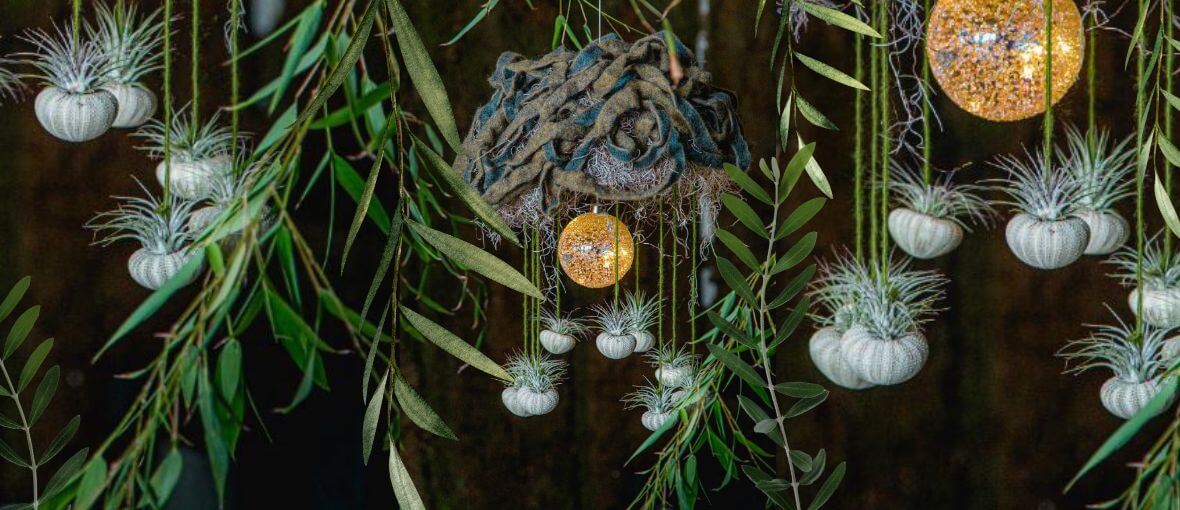
Air plants, also known as tillandsias, are amazing, impressive little plants that need very little to survive. Designer Annick Mertens has transformed this perfect, living decoration into a martime sculpture in a dark and mystical world of colour. Here we show you how you can create such a fascinating deep-sea jellyfish.

Required utensils

Required utensils Maritime
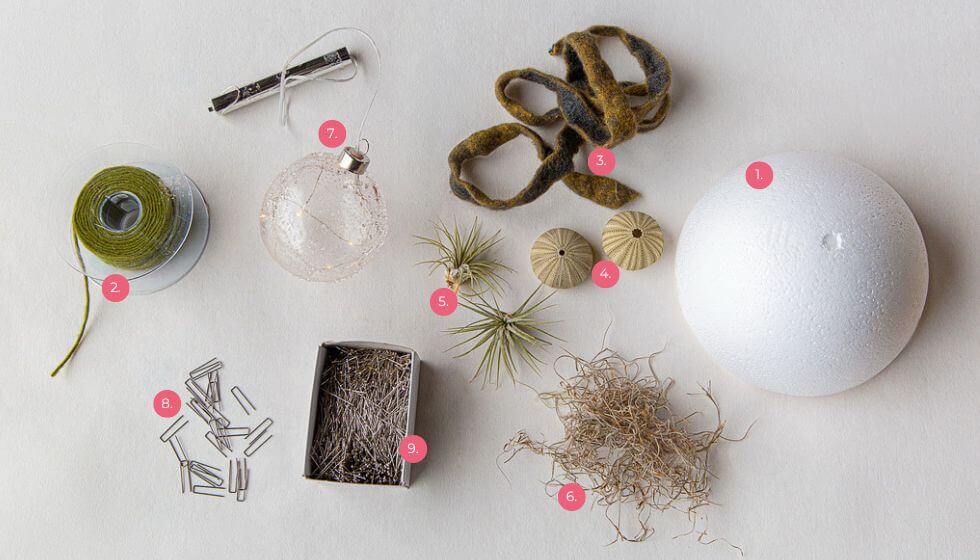
  1. Half polystyrene ball
  2. STYLIT woollen cord "wicking thread" in moss green
  3. STYLIT felt ribbon "Organic"in curry yellow-grey
  4. Sea urchin housing
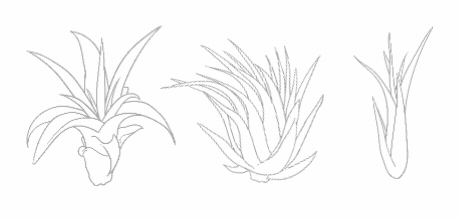
  5. Air plants with upward growing leaves (Tillandsia ionanatha)
  6. Louisiana moss
  7. Decorative light with battery
  8. Flower pins
  9. Thin pins

Tools: small knife and a hot glue gun

Materials and colours

MOOS GREEN GU13

CURRY YELLOW GU42

ASH GREY GR15

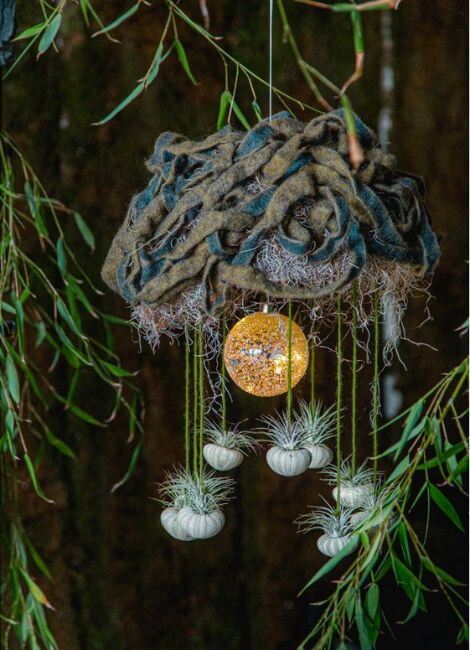
With great creativity and attention to detail, Annick Mertens has created a fascinating piece that The grace of a mystical jellyfish carries within itself. The materials and colours she has used convey the nautical theme. Deep-sea feeling and bring a touch of the exotic to any garden or summer party.

The Jellyfish body is artistically designed and consists of greenish Louisiana grasswhich gives it an organic and lively texture. To give the piece a harmonious colour scheme, Annick has used the two-tone Felt band «Organic» in ash grey and curry yellow which surrounds the jellyfish body. The cleverly placed colour accents create an exciting contrast and the jellyfish arouses additional visual interest.

The fascinating tentacles of the jellyfish are also richly detailed. Annick uses the green woollen cord "wick thread"to imitate the smooth movements of the tentacles. Dangling from the ends of the tentacles Greenish-turquoise sea urchin shellswhich lend the workpiece an elegant and mystical touch. These bowls contain Air plants which add an organic and lively component to the overall picture.

The combination of greenish Louisiana grass, the moss green of the woollen ribbon and the curry yellow accents creates a harmonious colour palette that makes the maritime theme and emphasises the reflects the beauty and mystery of the deep sea. Annick Mertens has succeeded in using these materials and colours to create a free-hanging, illuminated sculpture that fascinates and captivates every viewer.

Step by step

Step 1:
Prepare the polystyrene ball

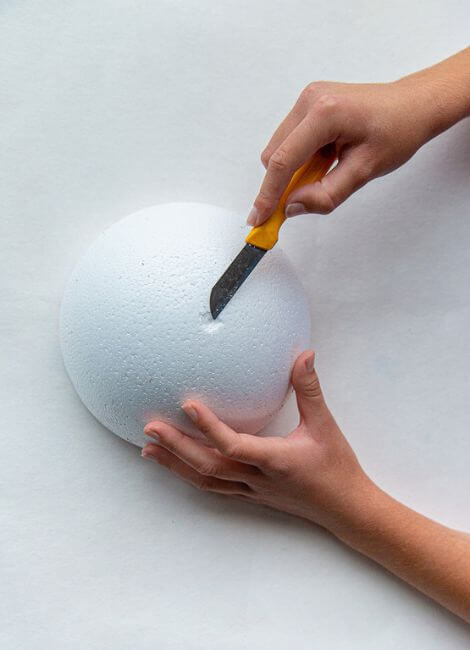
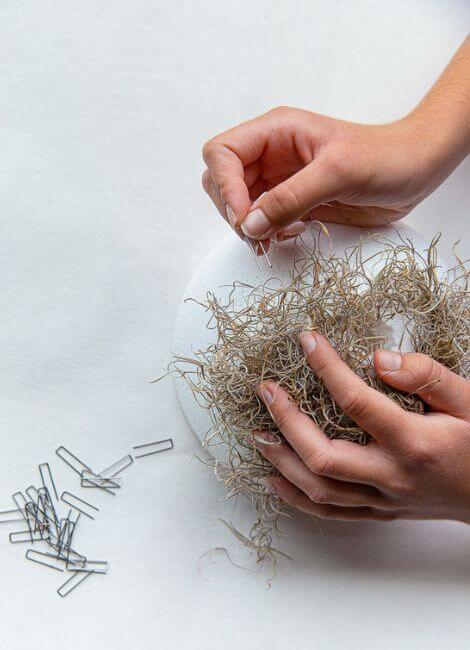
Take your polystyrene ball and cut a small hole in the centre of the ball with a knife. 

Maritime Step 1
Maritime Step 2
Step 2:
Fix light

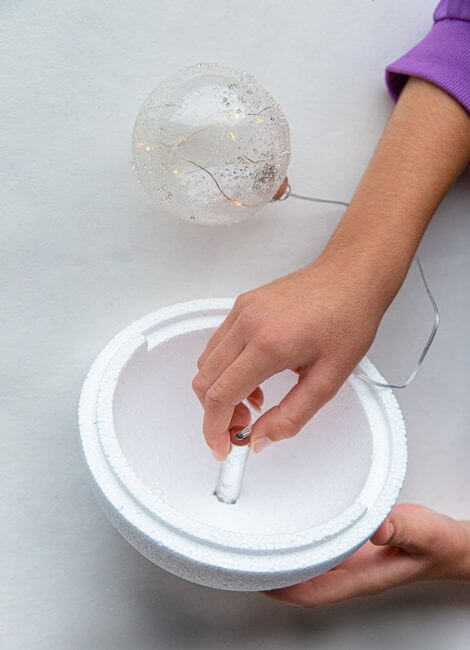
Insert the battery of your decorative light into the prepared hole. To fix it in place even better, you can carefully glue it to the edge of the hole using a hot glue gun. 

Step 3:
Pinning Louisiana moss
Take a few flower pins and attach the Louisiana moss to the polystyrene ball. Use as much moss as you need until there are no more white patches and the whole ball is covered in moss.
Maritime Step 3
Maritime Step 4
Step 4:
Decorate with organic ribbon

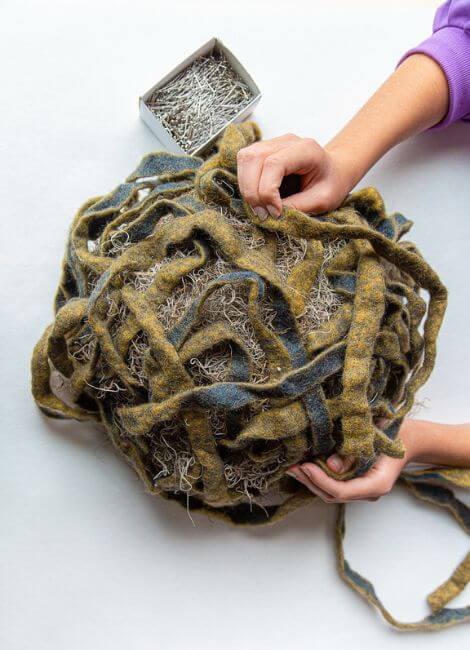
Now you can decorate the jellyfish body with the STYLIT felt ribbon "Organic". To do this, wrap the ribbon around the ball and secure it with small, thin pins. Make sure that it doesn't look too neat when wrapping it around the ball. The ribbon should be draped in waves and may cross over or stick out a little. 

Step 5:
Design "tentacles" with air plants

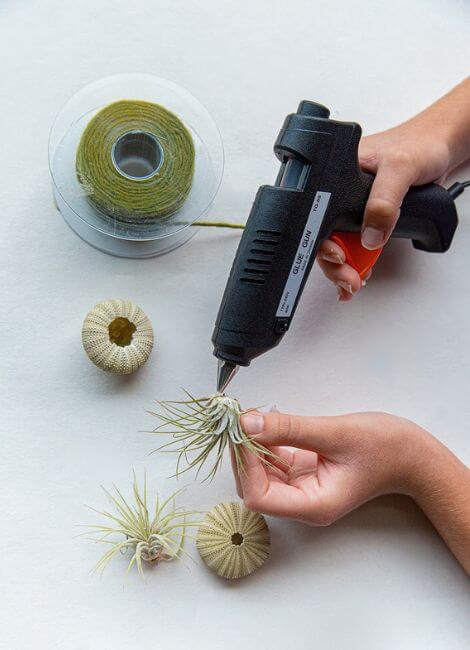
Take a sea urchin shell and thread the woollen cord "wick thread" through the large opening into the inside of the shell. Glue the cord in the centre. Cut the ribbons from all the sea urchins at different lengths between 30 and 50 cm so that the "tentacles" are of different lengths. Then glue the small perching plants into the sea urchin shells.

Maritime Step 5
Maritime
Step 6:
Everything ready for the dive!
Now attach the other end of the STYLIT wool cord "wick thread" to the inside of the polystyrene ball. You can do this with a hot glue gun or with a few flower pins. You have created an extraordinary maritime sculpture so quickly and can hang it up as a decoration in your home or garden to bring a special ocean atmosphere into your home.
Caring for air plants
Tip!
Proper care of air plants
Tip
The most important aspect of care is watering. Air plants can be watered either by immersing them in water or by spraying them regularly with a spray bottle. However, make sure that no water collects between the leaves after watering to prevent rotting.

How-to video

Designer

Annick Mertens
Annick Mertens

Florist Annick Mertens from Verrebroek in Belgium is a true master of floral design and captivates everyone with her creative arrangements.

"The materials of the STYLIT products all have a natural and soft look and this fits well with the emotions of my floral work. The colours of the collections combine well with twigs, moss and other natural materials. They make every piece simply unique."