


Step by step instructions

Design herb basket

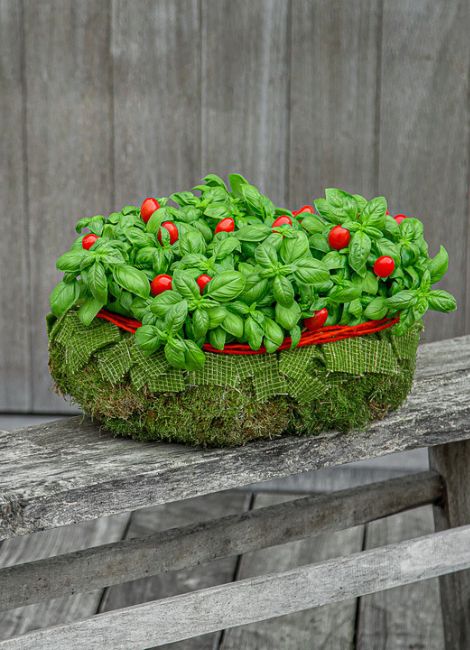
Let Annick Mertens show you how florists can get the best out of simple potted herbs. With her summery piece, Annick takes you into a world full of colour and creativity. The cheerful Belgian will show you how to create an extraordinary herb basket with natural materials and put a smile on your customers' faces.

Required utensils

  1. STYLIT sheep's wool felt "Gitti" in moss green
  2. Bunny wire
  3. Real moss
  4. STYLIT wool cord "wick thread" in scarlet red
  5. Fresh basil
  6. Tomatoes to decorate with wooden sticks

Tools: hot glue gun, scissors, florist's wire

Materials and colours

MOOS GREEN GU13

SCARLET RO03

FRESH HERBAL GREEN

The herb basket itself is made of green moss, which forms a Natural and earthy atmosphere creates. Placed on top is the STYLIT sheep's wool felt "Gitti" also in a harmonious Moss greenwhich conveys a calming yet lively effect. The natural jute structure of the felt, the colour of the moss and felt is reminiscent of fresh nature and allows the viewer to immerse themselves in a green forest clearing. 

To give the piece a lively touch, Annick has skilfully worked with the Complementary colour red worked. The red stands opposite the green in the colour wheel and thus creates a exciting contrast. The STYLIT woollen cord "wicking thread" in Scarlet red acts as a colour highlight and immediately attracts attention. This vibrant colour gives the herb basket a energetic and dynamic charismawhich makes the entire arrangement shine.

The combination of the natural moss green and the powerful red creates a fascinating balance between calm and vibrancy. 

Step by step

Step 1:
Cut the felt to size

Firstly, take your STYLIT sheep's wool felt "Gitti" and cut out small squares and rectangles about 2 cm in size. They don't necessarily all have to be exactly the same size. It can even give your herb box a little "wild" touch if they are slightly different.

Herb basket design Step 1
Herb basket design Step 2
Step 2:
Attaching moss
Next, attach the moss to your chicken wire using green florist's wire. Bend the chicken wire into the desired shape beforehand so that you can easily place the herbs in it later. Place the moss on the outside of the wire basket.
 
Step 3:
Glue on felt
Now use a hot glue gun to attach the small felt squares and rectangles to the outside of the wire basket. The felts can overlap a little and be glued on in a jumble, which gives the whole thing an even more natural look.
 
Herb basket design Step 3
Herb basket design Step 4
Step 4:
Planting
Now it's the herbs' turn. Place them directly in the basket with the pots. You can also use other herbs instead of basil: Mint, rosemary, thyme or all of them together - there's room for them all in your herb box. As a great contrast to eating them straight away, you can stick small tomatoes on wooden skewers between your herbs. Or you can use small mini or ornamental chillies in pots, which stay fresh for longer and also provide a colourful contrast.
 
Step 5:
Wrapping
You can add that certain something to the herb basket with the STYLIT wool cord "wicking thread" in scarlet red. The colour of the cord continues the tomato red in this piece. Simply tie the felt cord once or twice around the top edge and the herb box is perfect.
 
Herb basket design Step 5
Herb basket design Step 6
Step 5:
Skilful placement
You can use natural materials to create an unusual and colourful herb basket. Cleverly placed in the shop or shop window, it will soon find a new home with passers-by or customers. 
 

How-to video

Designer

Annick Mertens
Annick Mertens

Florist Annick Mertens from Verrebroek in Belgium is a true master of floral design and captivates everyone with her creative arrangements.

"The materials of the STYLIT products all have a natural and soft look and this fits well with the emotions of my floral work. The colours of the collections combine well with twigs, moss and other natural materials. They make every piece simply unique."